The short version: if you keep oxygen roughly like today, rising CO₂ on its own probably won’t produce truly gigantic insects. The best-supported mechanism for past insect gigantism is higher oxygen (hyperoxia), not higher CO₂.
What actually limits insect size?
Insects deliver oxygen through a network of tubes (the tracheal system) rather than lungs. That system is efficient for small bodies, but it becomes progressively harder (and more costly) to deliver enough oxygen to all tissues as size increases.
A detailed review in Proceedings of the Royal Society B (open access via PubMed Central) summarises the idea like this:
- Giant insects in the late Palaeozoic coincide with periods when atmospheric oxygen partial pressure appears to have been higher than today.
- Many insects develop smaller body sizes in low oxygen, and some develop/evolve larger sizes in high oxygen.
- Larger insects must invest proportionally more in the tracheal system, so oxygen availability can bite harder as size increases.
Source: Atmospheric oxygen level and the evolution of insect body size (Harrison et al.).
So… what does rising CO₂ do?
CO₂ matters enormously for climate and ecosystems, but it’s not the same as oxygen supply. A few useful distinctions:
- CO₂ isn’t a fuel for animal metabolism. Animals need oxygen to release energy from food.
- CO₂ can affect insects indirectly via temperature, drought, plant quality, predators/parasites, and season length. Those pressures can push body size in different directions depending on species and context.
- If warming raises metabolic demand (more “engine power” needed), oxygen delivery constraints can become more challenging — which could work against extreme increases in size.
How big could insects get in the real world?
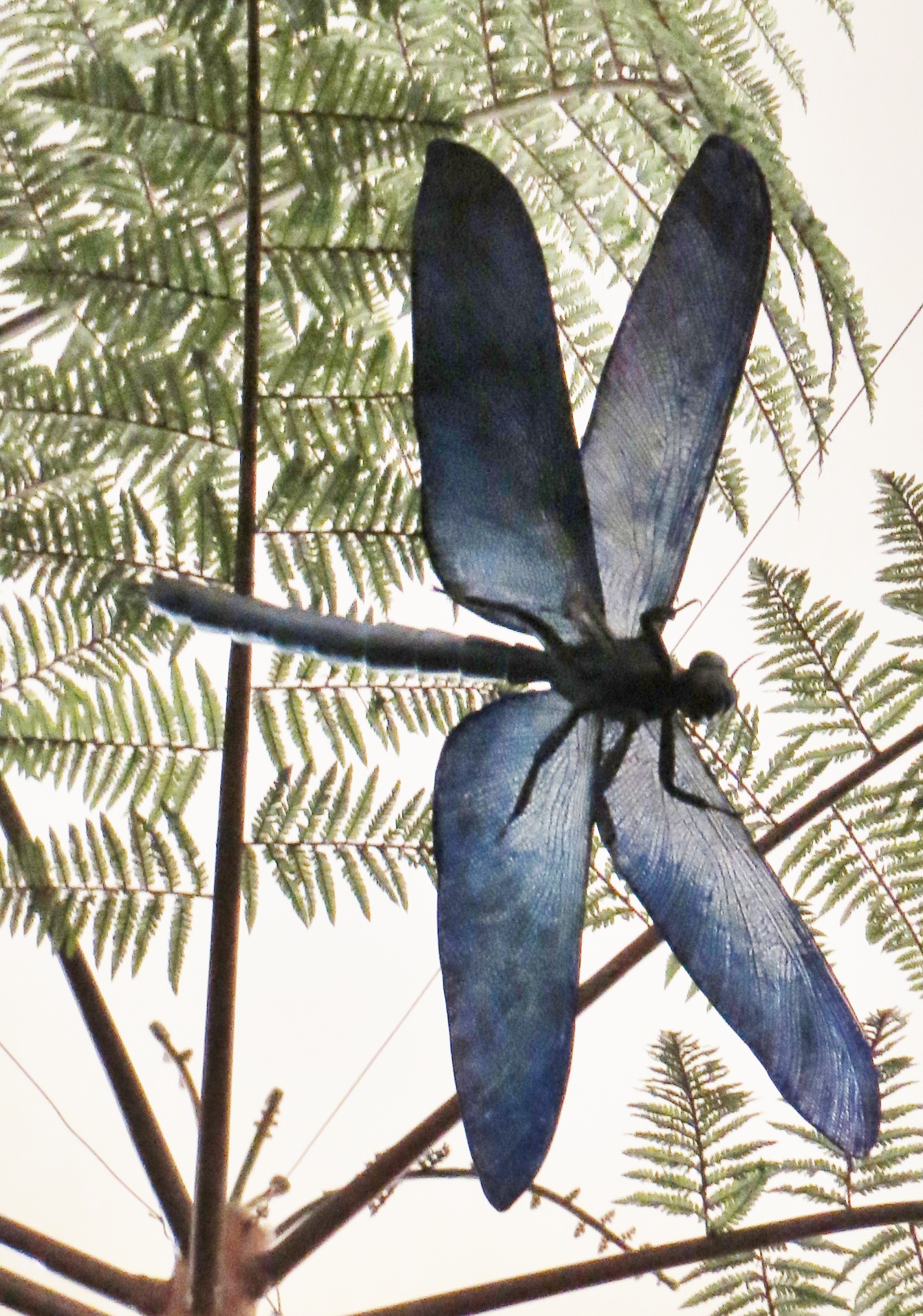
Earth history gives a boundary case: during the Carboniferous/Permian, some insects became exceptionally large (often exemplified by the ‘giant dragonfly-like’ Meganeura), and that era also appears to line up with a hyperoxic atmosphere in multiple oxygen models. That’s consistent with oxygen being a key enabling factor.
Bottom line: higher CO₂ alone doesn’t give a clean pathway to “giant insects”. To get truly outsized insects, you’d more likely need a substantial shift in oxygen availability (or a fundamentally different way of breathing).
Sources
- Harrison et al. — Atmospheric oxygen level and the evolution of insect body size (open access)
- Image: Meganeura restoration photo (Musée d’Histoire Naturelle, Lille) by Wikimedia Commons user Ghedoghedo, CC BY-SA. Source.