The great crested newt, and why it’s so protected
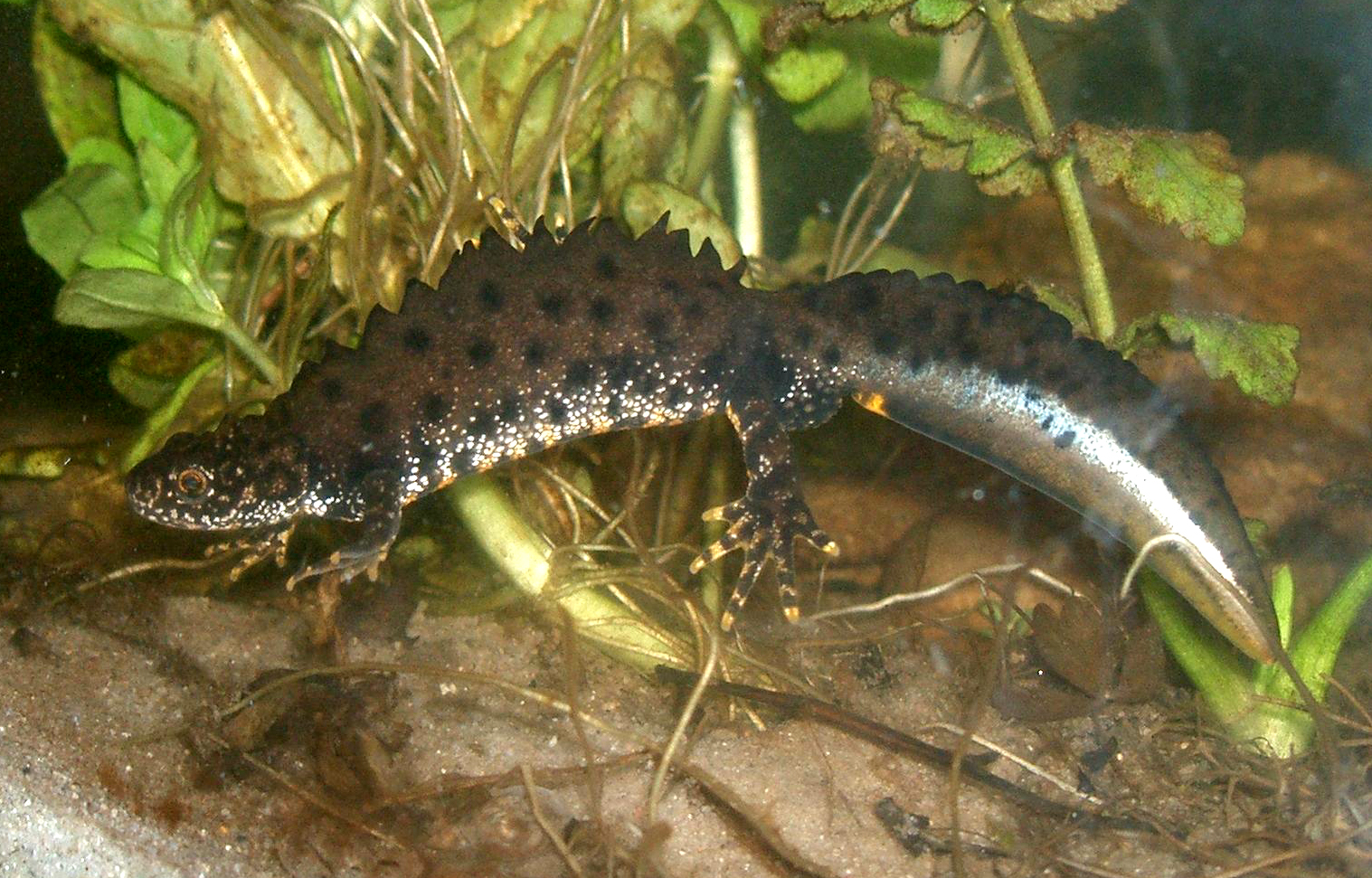
The great crested newt (Triturus cristatus) is one of the UK’s most famous “protected species”. If you’ve ever wondered why small construction projects can end up involving ecologists, surveys, timing restrictions, or licences—this animal is a big part of the story.
What the law actually protects
In plain English, UK law doesn’t just protect the animal—it also protects its eggs, and the places it uses to breed and rest. The GOV.UK guidance summarises the main things you must not do, including deliberately capturing, killing, injuring or disturbing great crested newts, and damaging or destroying breeding or resting places.
- The animal itself (all life stages)
- Eggs
- Breeding sites and resting places (even when newts aren’t present)
Planning, surveys, and licensing (why it affects development)
Natural England’s “standing advice” for planning decisions explains that great crested newts are a European protected species and describes the kinds of impacts that are normally high/medium/low (for example, loss of breeding ponds and terrestrial habitat close to ponds tends to be higher impact). It also outlines when surveys are typically required and how mitigation/compensation should work.
If impacts can’t be avoided, developers may need a mitigation licence from Natural England, and the usual hierarchy applies: avoid harm first, then mitigate, and only then compensate (for example by creating replacement ponds and improving habitat connectivity).
So is it ‘too much’? A (slightly heretical) take
The great crested newt has become a symbol of the UK’s attempt to take biodiversity seriously inside a planning system that is otherwise optimised for speed. The friction is real—surveys are seasonal, evidence needs to be current, and licences take effort. But the flip side is that protections for the newt effectively protect a whole little ecosystem around ponds, hedgerows, rough grassland and woodland edges.
NatureSpace Partnership: a practical, landscape-scale alternative
One reason great crested newts end up in the headlines is that the classic, site-by-site approach to licensing can be slow and uncertain: surveys are seasonal, evidence goes stale, and small projects can end up paying a lot of time and money to resolve risk.
NatureSpace Partnership runs district-level licensing schemes (DLL) for great crested newts. The basic idea is simple: instead of trying to “solve newts” separately for every development site, developers join a scheme that reduces friction for planning and licensing, while directly funding long-term habitat creation and management in strategic locations.
- Quicker and more certain for developers and planners (less reliance on repeated surveys for every site, where the scheme applies)
- Better outcomes for nature by investing in a coordinated conservation strategy at a landscape scale
- More transparent trade-off: development contributes to habitat delivery and long-term management, rather than only on-paper mitigation
Why is this sensible? Because it aligns incentives. Instead of treating protection as a one-off box-ticking exercise at each site boundary, it turns “compliance” into a funding stream for habitat that can be monitored and maintained. Done well, that’s a more robust way to protect a species whose survival depends on networks of ponds and terrestrial corridors, not isolated pockets of land.
(For the official framing, see Natural England’s standing advice on district-level licensing and how it fits into planning decisions.)